
Blog
The Beauty of Bark, Branches and Berries
Sep
When the last flowers fade and autumn leaves begin to fall, the garden doesn’t have to become boring. In fact, winter reveals an entirely different side of the landscape.
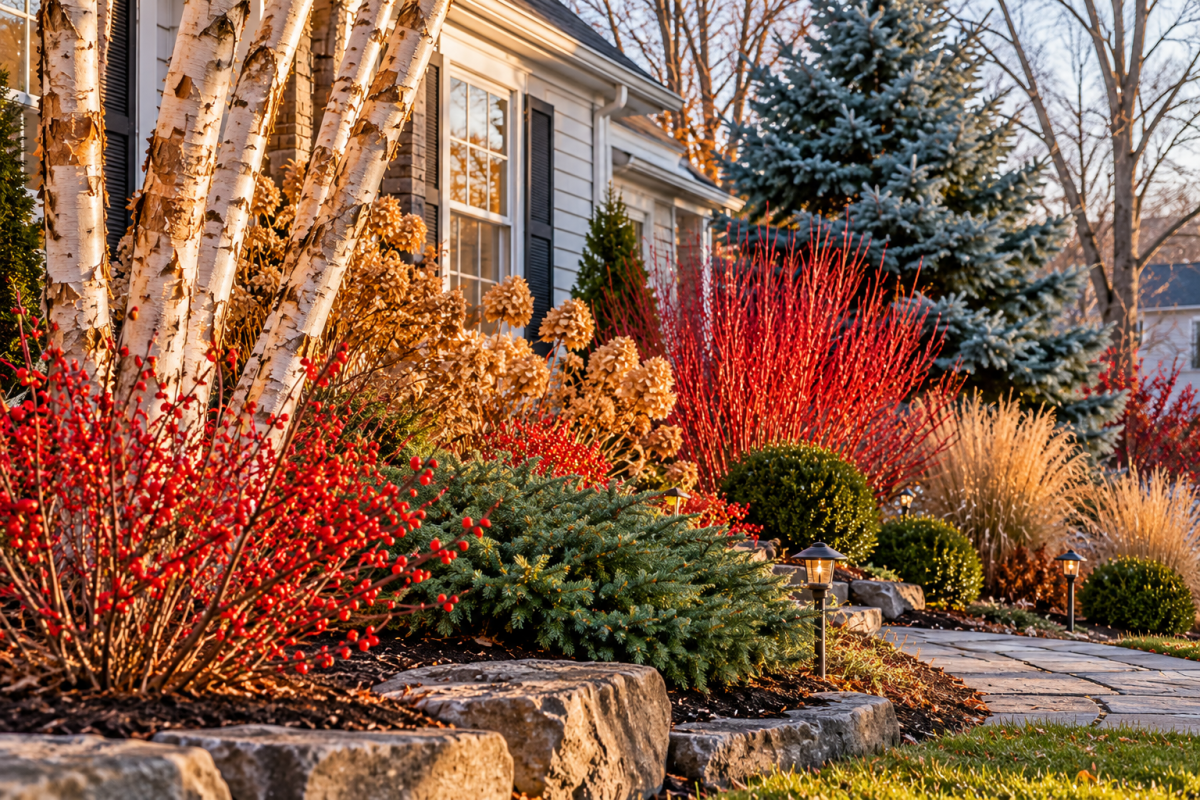
Without summer foliage competing for attention, beautiful bark, colorful berries, interesting branching patterns and evergreen structure suddenly take center stage. Choosing plants with these features can help create a landscape that looks interesting long after the growing season ends.
Beautiful Bark Deserves Attention
Bark is often overlooked when choosing trees and shrubs, but it can become one of the most noticeable features in the winter garden.
River birch offers peeling, textured bark in shades of cream, tan and cinnamon. Paperbark maple is another standout, with rich reddish-brown bark that curls and peels away from the trunk.
Dogwoods can bring winter color in another way. Certain varieties have brilliant red or yellow stems that become especially striking against snow or a muted winter landscape.
Branches Become Part of the Show
Once leaves disappear, the natural architecture of trees and shrubs is revealed.
Interesting branching can add height, movement and texture to otherwise bare areas of the landscape. Japanese maples, contorted shrubs and ornamental trees with graceful or unusual branching patterns can be just as attractive without their leaves as they are during summer.
This is especially important around patios, walkways, entrances and windows where plants can be appreciated throughout the year.
Berries Bring a Pop of Winter Color
Bright berries can make an enormous difference when much of the landscape has turned brown, gray and green.
Winterberry holly is a winter favorite, producing brilliant red berries along bare stems. Certain hollies, viburnums and crabapples can also provide colorful fruit that persists into the colder months.
As a bonus, berry-producing plants can provide an important seasonal food source for birds and other wildlife.
Evergreens Provide the Backbone
While bark and berries add beautiful details, evergreens help hold the entire winter landscape together.
Spruce, pine, fir, arborvitae, juniper and broadleaf evergreens provide reliable color and structure when deciduous plants are bare. They can be used as foundation plants, screens, accents or backdrops for plants with colorful stems and berries.
Combining evergreens with deciduous plants is one of the easiest ways to create a landscape that remains visually interesting throughout winter.
Look Beyond the Flowers
When shopping for plants, it’s easy to fall in love with whatever happens to be blooming. But a beautiful landscape should offer something to enjoy in every season.
Consider what a plant will contribute after its flowers and leaves are gone. Does it have interesting bark? Colorful berries? A distinctive shape? Evergreen foliage? Beautiful branching?
Choosing plants for more than one season of interest can transform a landscape from something that looks great for a few months into a garden worth looking at all year.
Discover the Beauty of the Winter Garden
Fall is a wonderful time to evaluate your landscape and notice where winter interest may be missing. A few thoughtfully chosen trees and shrubs can bring color, texture and structure to areas that otherwise feel empty during the colder months.
Stop by Sixteen Acres Garden Center and explore plants that can keep your landscape beautiful long after the flowers have faded.
Sixteen Acres Garden Center
1359 Wilbraham Road
Springfield, MA 01119
Fall Hours: Open Daily, 8:00 AM to 5:00 PM
