
Blog
The Truth About Watering Plants Before Winter
Nov
As November arrives in Western Massachusetts, the leaves are falling, temperatures are dropping, and our gardens are getting ready for their long winter rest. With the growing season winding down, you might think it’s finally time to put away the watering can and garden hose.
But not so fast! Your plants may still be thirsty!
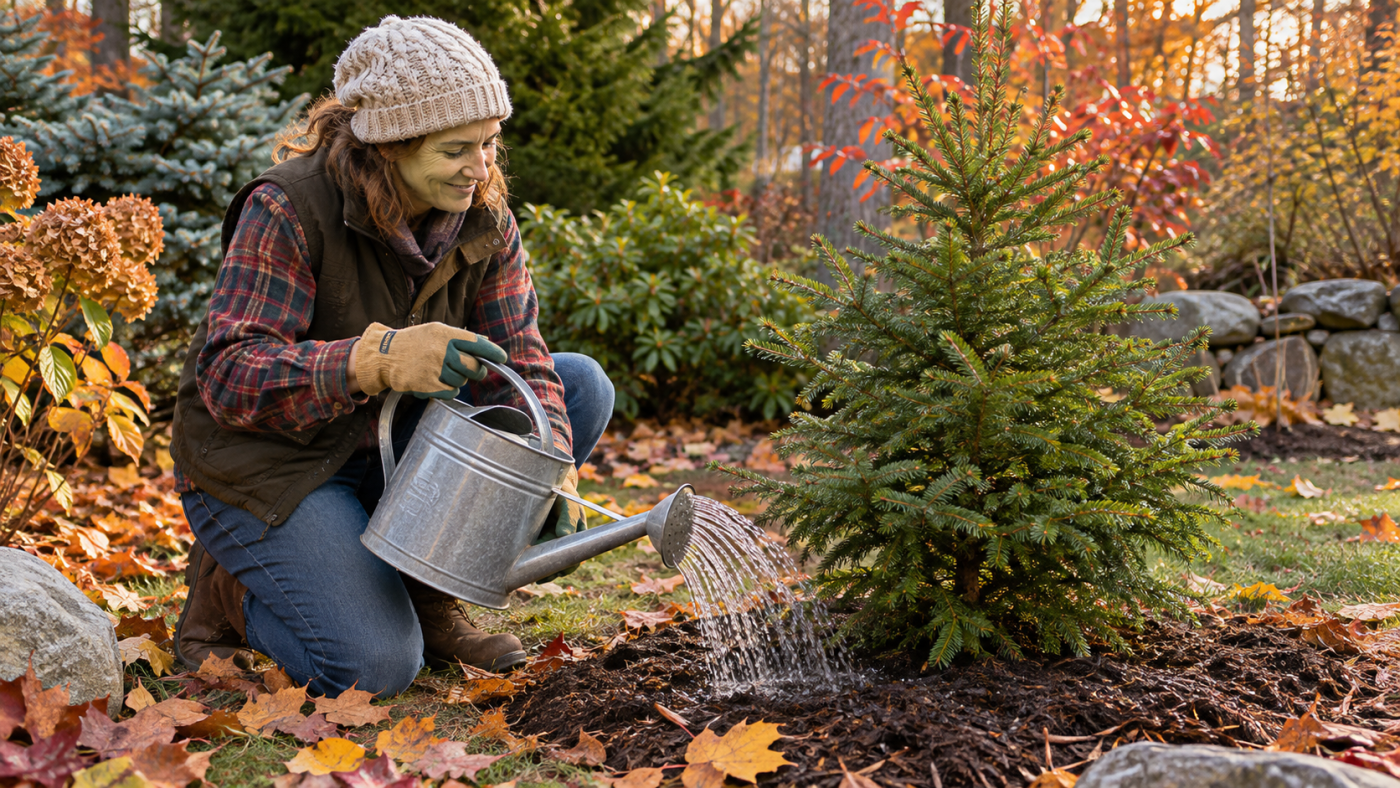
One of the biggest misconceptions about fall gardening is that cooler temperatures mean plants no longer need water. In reality, proper watering before winter can make a big difference in how well your trees, shrubs, and evergreens survive the colder months.
Let’s uncover the truth about fall watering and why a little extra attention now can lead to a healthier, more beautiful garden next spring!
Cooler Weather Doesn’t Mean Moist Soil
It’s easy to assume that because the air feels cool and the summer heat is behind us, the ground must have plenty of moisture.
Unfortunately, that’s not always the case!
Fall weather can bring extended dry periods, and soil can lose moisture even when temperatures are chilly. Windy days, limited rainfall, and well-drained soils can all contribute to dry conditions.
Here in the Springfield area, late-fall weather can be unpredictable. A few rainy days may provide plenty of moisture, while several dry, breezy weeks can leave plants needing a good drink.
The important thing is to pay attention to your soil rather than relying on the temperature alone.
Why Watering Before Winter Matters
Plants may be slowing down above ground, but their roots can remain active as long as soil temperatures are favorable.
Adequate soil moisture helps trees and shrubs prepare for winter and reduces stress as temperatures drop.
Once the ground freezes, plant roots have a much harder time absorbing water. If plants enter winter already stressed from dry conditions, they may be more vulnerable to damage.
This is especially important for newly planted trees and shrubs that haven’t yet developed extensive root systems.
A little extra care before the ground freezes can help protect your investment in your landscape!
Newly Planted Trees and Shrubs Need Extra Attention
Did you add a new tree or shrub to your landscape this year?
If so, don’t forget about it just because the growing season is ending!
Newly planted trees and shrubs need consistent moisture while their roots become established. Unlike mature plants, their limited root systems can’t reach as far into the surrounding soil for water.
Even plants installed earlier in the year may still need supplemental watering during dry fall weather.
Keep an eye on:
- Newly planted shade and ornamental trees.
- Flowering shrubs and landscape hedges.
- Recently transplanted plants.
- Trees and shrubs planted in raised beds or well-drained soil.
- Plants growing in exposed, windy locations.
Gardening tip: Check the soil around the root ball, not just the surrounding garden bed. Newly planted root balls can dry out even when nearby soil feels moist.
Evergreens Are Especially Vulnerable to Winter Drying
Evergreens may keep their beautiful color throughout the year, but that doesn’t mean they’re immune to winter stress.
Unlike deciduous trees that drop their leaves, evergreens hold onto their needles or foliage throughout winter.
They continue losing small amounts of moisture through their leaves and needles, even during colder weather.
When the ground freezes, their roots may be unable to replace that lost water.
The result? A condition commonly called winter burn.
What Is Winter Burn?
Winter burn occurs when evergreen foliage loses more water than the roots can absorb.
This can cause needles and leaves to turn brown, bronze, or appear dried out, often becoming noticeable in late winter or early spring.
Plants that may be affected include:
- Arborvitae
- Rhododendrons
- Boxwoods
- Hollies
- Yews
- Pines and spruces
Newly planted evergreens and those exposed to strong winter winds or afternoon sun are particularly vulnerable.
One of the simplest ways to help prevent winter burn is to make sure your evergreens have adequate soil moisture before the ground freezes.
How to Tell If Your Plants Need Water
Before you reach for the hose, check your soil!
Watering when the soil is already wet can be just as harmful as letting plants dry out.
Try the Simple Soil Test
Use a small garden trowel to check the soil approximately 4 to 6 inches below the surface, taking care not to damage roots.
- Dry and crumbly? Your plants may need water.
- Cool and slightly moist? They’re probably doing just fine.
- Wet and soggy? Hold off on watering and allow the soil to drain.
For newly planted trees and shrubs, check moisture deeper in the root ball when practical.
Remember, soil type matters too! Sandy soils generally drain more quickly, while heavier clay soils retain moisture longer.
The goal is consistently moist soil, not saturated soil.
Five Smart Fall Watering Tips
A few simple habits can help your garden head into winter in better shape.
1. Water Deeply, Not Just Frequently
A quick sprinkle may wet the surface without providing enough moisture to reach the roots.
Instead, water slowly and thoroughly, allowing moisture to soak into the root zone.
A soaker hose or a gently running garden hose can help deliver water where it’s needed most.
2. Pay Attention to Rainfall
Autumn rain can reduce the need for supplemental watering, but don’t assume one rainy afternoon is enough.
If your area hasn’t received substantial rainfall, check the soil around trees and shrubs to see whether additional water is needed.
3. Give New Plantings Priority
Recently planted trees, shrubs, and evergreens should be at the top of your fall watering checklist.
Their developing root systems make them especially sensitive to dry conditions.
Continue monitoring moisture until the ground freezes.
4. Add a Layer of Mulch
A 2 to 3-inch layer of organic mulch can help conserve soil moisture, reduce temperature fluctuations, and protect developing roots.
Shredded bark, wood chips, and other organic mulches work well around trees and shrubs.
Just remember to keep mulch a few inches away from trunks and stems.
5. Know When to Stop Watering
Continue checking soil moisture during dry fall weather as long as the ground remains unfrozen.
Once the soil freezes, regular watering is no longer practical because water cannot penetrate the frozen ground effectively.
Before winter settles in, disconnect and drain garden hoses and prepare outdoor faucets for freezing temperatures.
Can You Overwater in Fall?
Absolutely!
While dry conditions can stress plants, too much water can damage roots by reducing the oxygen available in the soil.
Poor drainage, saturated soil, and frequent unnecessary watering can contribute to root problems.
That’s why it’s important to check moisture before watering rather than following a rigid schedule.
Every landscape is different, and the right amount of water depends on your plants, soil type, recent rainfall, and weather conditions.
A Healthier Spring Garden Starts Now!
It’s tempting to think gardening season ends when the leaves begin to fall, but a little attention in November can make a big difference when spring arrives.
By checking soil moisture, watering newly planted trees and shrubs when needed, and giving evergreens a little extra care, you can help your landscape withstand winter’s challenges.
Have questions about preparing your trees, shrubs, and evergreens for winter?
Stop by Sixteen Acres Garden Center in Springfield, MA! Our friendly team is happy to help you find the right gardening supplies, explore seasonal plant care solutions, and offer advice for keeping your landscape healthy throughout the changing seasons.
Don’t let your garden go into winter thirsty. A little water now can help bring beautiful rewards next spring!
